

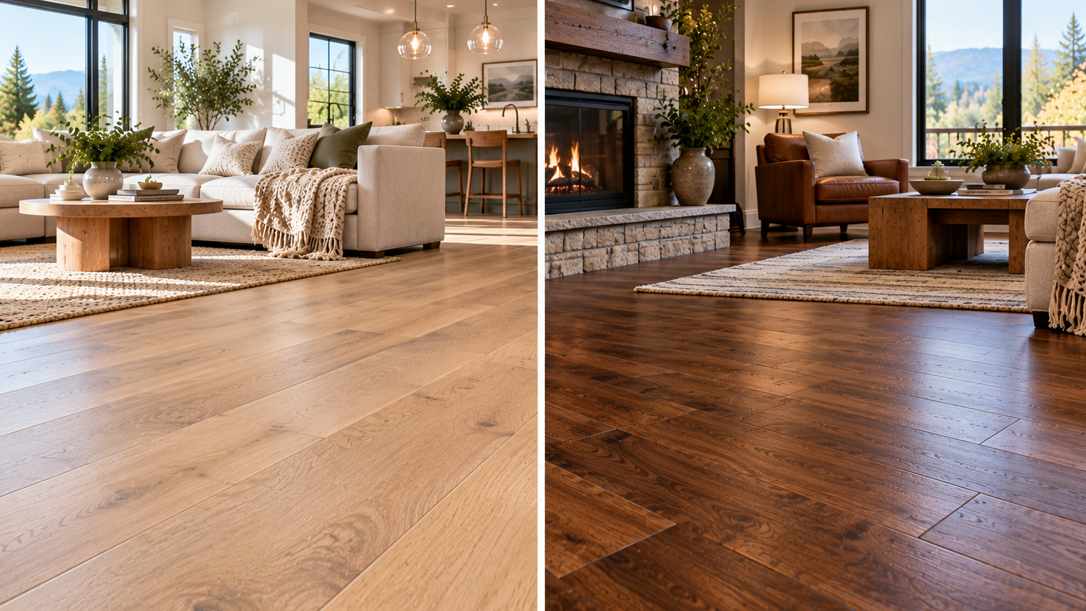
Few upgrades add warmth and character to a home quite like hardwood. Once you decide on wood, though, a second question comes up quickly: engineered or solid? Both are real wood, both look beautiful and both can last for decades, but they are built differently and behave differently in a home. For Medford homeowners, the Rogue Valley climate plays a big part in that choice. At PG Long, a family business with four generations of flooring experience, we help homeowners weigh these options every week.
Here is a clear look at how the two compare.
What Is Solid Hardwood?
Solid hardwood is exactly what it sounds like: each board is milled from a single piece of wood, typically around three quarters of an inch thick. Oak, maple, hickory and walnut are popular species.
Strengths of Solid Hardwood
It can be sanded and refinished many times over its life
It has a classic, authentic feel underfoot
It suits traditional homes and timeless interiors
It can add long-term value to a property
Limitations of Solid Hardwood
Because it is a single piece of wood, solid hardwood expands and contracts as humidity changes. It is generally not recommended below grade, such as in basements, and it is usually nailed down over a wood subfloor rather than installed over concrete.
What Is Engineered Hardwood?
Engineered hardwood has a top layer of real wood bonded to a core of plywood or high-density fiberboard. The layers run in different directions, which makes the board far more stable.
Strengths of Engineered Hardwood
Greater resistance to changes in temperature and humidity
Can be installed over concrete and in some below-grade spaces
Wide-plank and long-board styles are easier to produce
Many products offer floating, glue-down or nail-down installation
Limitations of Engineered Hardwood
The number of times you can refinish engineered wood depends on the thickness of its top layer. Thinner wear layers may allow one light refinish or none at all, while thicker ones can be sanded several times.
How Medford's Climate Affects Your Choice
Medford sits in a valley with hot, dry summers and mild, wet winters. Those seasonal swings in humidity are worth thinking about when choosing wood.
Hot, Dry Summers
During long summer stretches, indoor air can become very dry, especially with air conditioning running. Solid hardwood may shrink a little and show small gaps between boards. Engineered hardwood's layered construction helps it hold its shape more consistently.
Mild, Wet Winters
In the wetter months, moisture levels rise and wood can swell. Again, engineered boards tend to move less. Solid hardwood can still perform beautifully, but proper acclimation and steady indoor humidity are important.
Smoke and Dust Seasons
Wildfire smoke and summer dust can settle on floors throughout Southern Oregon. Both types of hardwood clean up easily with regular dry mopping, and a quality factory finish makes daily care simple.
Comparing Durability and Lifespan
Both options can last a very long time with good care. The key differences come down to refinishing and stability.
Solid hardwood can often last generations because it can be refinished repeatedly
Engineered hardwood with a thick wear layer can also last for decades and resists moisture-related movement better
Surface hardness depends on the wood species, not on whether it is solid or engineered
If you have pets or a busy household, a harder species and a tough finish will make more difference than the construction type.
Where Each Type Works Best
Choosing the right product often depends on the room and the subfloor beneath it.
Good Spots for Solid Hardwood
Living and dining rooms on the main floor
Bedrooms and hallways over wood subfloors
Older homes where you want to match existing floors
Good Spots for Engineered Hardwood
Homes built on a concrete slab
Basements and lower levels
Rooms that see bigger temperature swings
Open floor plans that call for wide, long boards
You can explore species, colors and finishes in our hardwood flooring collection to see how each style looks.
Cost and Value
Pricing varies widely by species, board width, finish and installation method, so it is hard to say one is always more affordable than the other. Some engineered products cost less than solid boards, while premium engineered options with thick wear layers can cost more.
The best way to judge value is to look at the full picture:
The material itself
Subfloor preparation needs
Installation method and labor
How long you plan to stay in the home
How often you may want to refinish
A free in-home estimate gives you a clear, personalized number based on your actual rooms.
Installation Matters
Even the finest hardwood will not perform well over a poor base. PG Long provides full-service installation along with subfloor repair and underlayment, so your new floor starts on solid ground. Our team also makes sure boards are acclimated properly before installation, which is especially helpful given the valley's seasonal humidity changes.
Caring for Hardwood Floors
Whichever type you choose, a few simple habits keep it looking its best:
Use doormats to catch grit and dust at entries
Sweep or dry mop several times a week
Wipe up spills promptly
Add felt pads to furniture legs
Keep indoor humidity steady with a humidifier or dehumidifier as needed
When the time comes for a refresh, professional cleaning and refinishing can bring back the original glow.
Making the Right Choice for Your Medford Home
There is no single winner between engineered and solid hardwood. Solid wood offers classic appeal and the ability to refinish again and again. Engineered wood offers stability, flexibility in installation and a wide range of modern styles. Your subfloor, your rooms and the local climate will point you toward the better fit.
PG Long has been in business since 1989 and brings honest advice and quality results to every project. Reach out to us to schedule a free in-home estimate and compare engineered and solid hardwood samples in your own home.
