

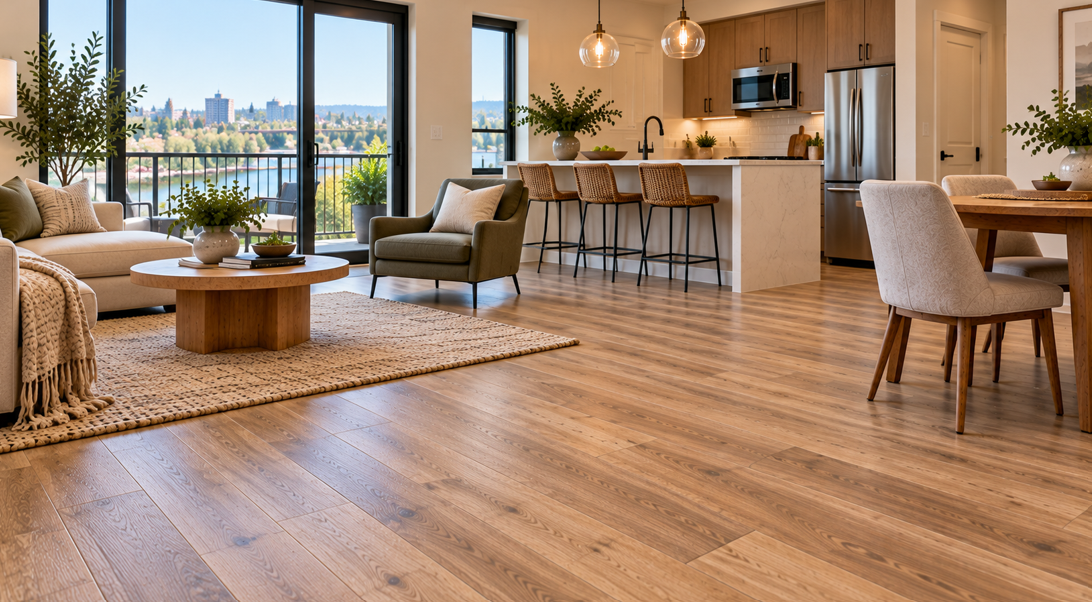
For property owners and managers, flooring is one of the biggest decisions in any unit. The right floor keeps tenants happy, speeds up turnovers and holds its value through years of move-ins and move-outs. In Spokane, where winters bring snow, ice and salty boots through every entry, that decision matters even more. At PG Long, we are an industry leader in the multi-family housing markets of Oregon, Idaho and southwest Washington, and luxury vinyl plank is one of the floors we recommend most often for rental properties.
Here is why it works so well and how to choose the right product.
Why Luxury Vinyl Plank Fits Rental Properties
Luxury vinyl plank, often called LVP, is a multi-layer floor with a printed design layer, a protective wear layer and a stable core. It looks like hardwood but is built for real-world wear.
Water Resistance
Many LVP products are highly water resistant or fully waterproof. Spilled drinks, pet accidents, overflowing sinks and wet boots are far less likely to cause lasting damage than they would with carpet or wood.
Scratch and Scuff Resistance
A quality wear layer protects against furniture, moving dollies and everyday traffic. That means units look fresh for longer between tenants.
Attractive, Modern Style
Today's renters expect updated finishes. LVP delivers convincing wood looks in a range of tones, from light Scandinavian oak to rich walnut, helping units photograph well and lease faster.
Built for the Inland Northwest
Spokane's climate puts floors to the test, and LVP holds up well to local conditions.
Snow, Salt and Grit
Cold, snowy winters mean tenants track in slush, ice melt and gravel. LVP resists moisture and cleans up with a damp mop, so entries and kitchens stay presentable through the season.
Dry Heated Air
Heated winter air can cause wood to shrink and gap. Rigid-core LVP is much more stable, so it stays flat and tight even when furnaces run for months.
Smoke and Dust
Summer wildfire smoke and dry, dusty days leave fine particles on floors. Hard surfaces like LVP are easy to keep clean, which is a plus for tenants with allergies.
Faster Turnovers, Less Vacancy
Every day a unit sits empty costs money. LVP helps shorten turnover time in several ways:
Many products click together as a floating floor, allowing quick installation
Damaged planks can often be replaced individually instead of redoing a room
Cleaning between tenants is faster than with carpet
The same product can be used across multiple units for consistent, simple ordering
Our luxury vinyl plank and tile collection includes styles suited to everything from single rentals to large apartment communities.
Choosing the Right LVP for Rentals
Not every LVP product is the same. Here are the key features to compare.
Wear Layer Thickness
The wear layer is measured in mils. For rental units, a thicker wear layer gives better protection against scratches, pets and furniture. Many property managers prefer a commercial-grade or heavy residential wear layer for long-term value.
Core Type
SPC (stone plastic composite) cores are dense and very rigid, offering excellent dent resistance
WPC (wood plastic composite) cores are a bit softer and warmer underfoot
Flexible glue-down LVP is thin and works well in some commercial and multi-family settings
Attached Underlayment
Some planks come with a pre-attached pad that adds comfort and helps reduce sound between floors. This is valuable in apartment buildings where noise transfer can lead to tenant complaints. Always confirm any building-specific sound requirements before choosing a product.
Color and Finish
Mid-tone colors with some grain variation tend to hide dust, footprints and minor scuffs better than very dark or very light options. Neutral shades also appeal to the widest range of renters.
Planning a Multi-Unit Project
If you are updating several units, a little planning goes a long way. Schedule installations around lease end dates, choose one or two colors for the whole property and keep a few spare boxes on hand for future repairs. This keeps finishes consistent and makes quick fixes simple.
LVP vs. Carpet in Rental Units
Carpet still has a place in bedrooms for warmth and sound control, but many owners are moving living areas, kitchens and hallways to LVP. Compared with carpet, LVP:
Holds up better to spills and pet accidents
Does not trap odors or allergens in the same way
Can often last through several tenancies with basic care
Is quicker to clean during a turnover
Many properties use a mix: LVP in main living spaces and wet areas, with carpet in bedrooms.
Full-Service Support for Property Managers
PG Long pairs a small-business culture with the buying power and labor force of a large company. For property owners, that means:
Residential and commercial flooring installation
A flooring warehouse and cash and carry option
Subfloor repair, underlayment and carpet disposal
Carpet cleaning, repair and re-stretch for units that keep carpet
Hard surface cleaning, stain removal and stain protection
Mitigation and restoration, flood service and mold remediation
Having flooring, cleaning and restoration under one roof makes it easier to keep units in top shape.
Simple Care Tips for Tenants
Sharing a short care guide with tenants helps protect your investment:
Use mats at entries to catch snow, salt and gravel
Sweep or vacuum regularly
Damp mop with a cleaner made for vinyl floors
Place felt pads under furniture
Avoid dragging heavy items across the floor
Upgrade Your Spokane Rentals with LVP
Luxury vinyl plank offers a practical blend of style, durability and easy upkeep that suits rental and multi-family properties. It handles Inland Northwest winters, speeds up turnovers and keeps units looking fresh for future tenants.
With roots spanning more than 50 years and four generations, PG Long understands what property owners need. We are here to help with a free estimate and product advice for your apartments and rentals.
