

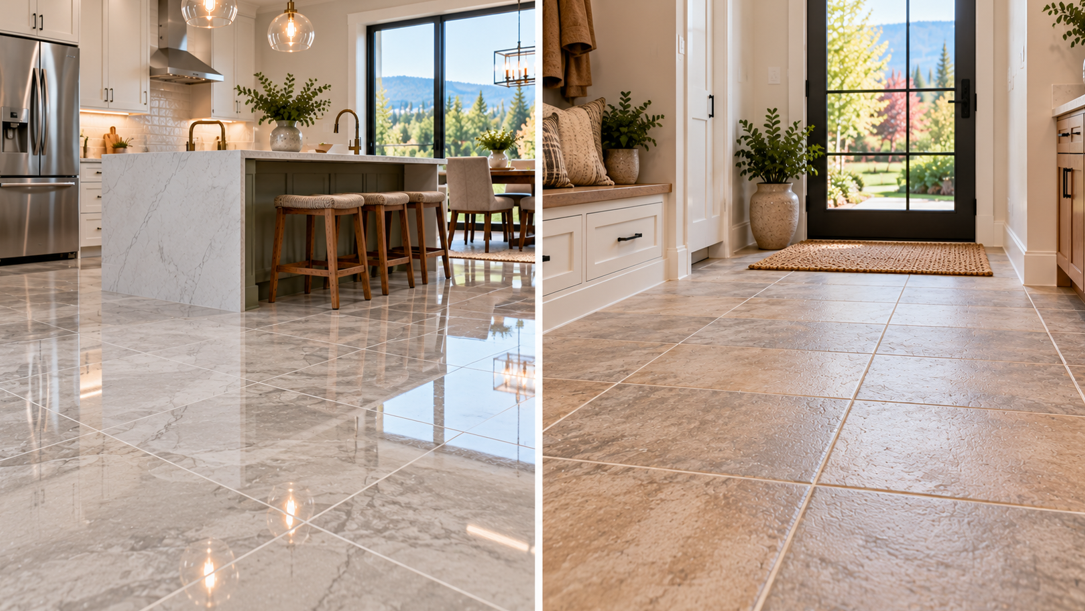
Tile is one of the most durable and versatile floors you can choose. It handles water, resists wear and comes in an almost endless range of colors, sizes and finishes. When you start shopping, though, you will quickly face a common question: porcelain or ceramic? The two look similar, but they have important differences. For Medford homeowners dealing with hot, dry summers and mild, wet winters, those differences can shape which tile is right for each room. At PG Long, we have helped homeowners choose and install floors since 1989, and this is a comparison we walk through often.
What Is Ceramic Tile?
Ceramic tile is made from a blend of natural clay, sand and water, shaped and fired in a kiln. A glaze is usually applied to the surface to add color, pattern and protection.
Strengths of Ceramic Tile
Wide variety of colors, patterns and shapes
Typically more affordable than porcelain
Easier to cut, which can simplify installation in rooms with many corners
Great for walls, backsplashes and low-to-moderate traffic floors
Limitations of Ceramic Tile
Ceramic is more porous than porcelain, so it absorbs more water. It is also softer, which means it can chip more easily under heavy impact. If the glaze chips, the different-colored body underneath may show.
What Is Porcelain Tile?
Porcelain is a type of ceramic tile made from finer, denser clay and fired at higher temperatures. The result is a harder, less porous tile.
Strengths of Porcelain Tile
Very low water absorption, ideal for wet areas
Excellent resistance to scratches, chips and heavy traffic
Many through-body porcelain tiles carry color through the whole tile, so chips are less visible
Realistic wood, stone and concrete looks
Many products are rated for outdoor use
Limitations of Porcelain Tile
Porcelain's density makes it heavier and harder to cut, so installation can take more skill and time. It usually costs a bit more than ceramic.
How Medford's Climate Plays a Role
Southern Oregon's weather affects how tile performs, especially near entries and outdoor living spaces.
Hot, Dry Summers
Tile stays naturally cool underfoot, which is a welcome feature during long, hot Medford summers. Both porcelain and ceramic offer this comfort indoors.
Mild, Wet Winters
Rainy months bring wet shoes, muddy paws and damp entryways. Porcelain's low absorption makes it a strong pick for mudrooms, entries and covered patios where moisture is common.
Wildfire Smoke and Dust
Smoke and dust seasons leave fine residue on surfaces. Tile's smooth, hard face is easy to sweep and mop, helping keep indoor spaces cleaner during those weeks.
Comparing Key Features
Here is a quick side-by-side summary of how the two stack up:
Water resistance: Porcelain is more resistant; ceramic works well in moderate-moisture rooms
Durability: Porcelain is harder and better for heavy traffic; ceramic suits lighter use
Cost: Ceramic is often more affordable; porcelain costs a bit more but offers added strength
Installation: Ceramic is easier to cut; porcelain needs specialized tools and experience
Design range: Both offer many styles, with porcelain leading in large formats and realistic wood looks
Where Each Tile Works Best
Choosing the right tile often comes down to the room.
Great Spots for Porcelain
Kitchens and high-traffic hallways
Bathroom floors and shower floors
Mudrooms and entryways
Covered patios and outdoor areas, when rated for exterior use
Homes with large pets or busy families
Great Spots for Ceramic
Bathroom walls and tub surrounds
Kitchen backsplashes
Laundry rooms with lighter traffic
Powder rooms and guest baths
Browse our tile flooring collection to see porcelain and ceramic options in a variety of looks and sizes.
Design Trends Worth Considering
Tile design has evolved far beyond plain squares. Popular choices include:
Wood-look porcelain planks that bring warmth without water worries
Large-format tiles with fewer grout lines for a clean, open look
Patterned ceramic for bold accent floors and backsplashes
Soft, natural stone looks in warm neutrals
Matching grout color to your tile can create a seamless appearance, while contrasting grout highlights patterns and adds a touch of personality to the room.
Budgeting for Your Tile Project
The total cost of a tile floor depends on more than the tile itself. Grout, setting materials, subfloor preparation, trim pieces and labor all play a part. Large-format and porcelain tiles may take longer to install, while simple ceramic layouts can move faster. A clear estimate helps you compare options with confidence.
Installation and Subfloor Preparation
Tile is rigid, so it needs a solid, level base to prevent cracks. PG Long offers full-service installation along with subfloor repair and underlayment to make sure every tile floor starts on a sound foundation. Porcelain in particular benefits from experienced installers because of its weight and hardness.
We also offer free in-home estimates, so we can review your space, check the subfloor and recommend the best tile for each room.
Caring for Tile Floors
Both porcelain and ceramic are low-maintenance. To keep them looking great:
Sweep or vacuum regularly to remove grit
Mop with a pH-neutral cleaner
Seal grout as recommended to resist stains
Wipe up spills promptly, especially on unglazed tile
PG Long also offers hard surface cleaning, stain removal and stain protection when your floors need a deeper refresh.
Find the Right Tile for Your Medford Home
Porcelain offers top-level durability and water resistance, while ceramic delivers style and value for lighter-use spaces. Many homes use both, choosing porcelain for floors and wet areas and ceramic for walls and backsplashes.
With four generations of family roots and a reputation for honesty and quality results, PG Long is ready to guide your project. Contact our team to book a free in-home estimate and compare tile samples in your own home.
